Articles

https://campaign-image.com/zohocampaigns/133052000002479297_zc_v64_last.png

“For of all gainful professions, nothing is better, nothing more pleasing, nothing more delightful, nothing better becomes a well-bred man than agriculture.”

— Marcus Tullius Cicero

NCAE New, Legal/Technical & Other Employer Issues:

A Toppenish, Wash., farm will pay $300,000 to settle allegations it discriminated against domestic workers by replacing them with foreign farmworkers.

Over the past year, the Equal Employment Opportunity Commission announced its intent to make perceived discrimination against American workers a high enforcement priority.

In a win for organized farmworker labor, an appeals court rejected the agriculture industry’s challenge of a 2023 state law making it easier for farmworkers to unionize.

A Wayne County judge last week confirmed a previously awarded union contract for H2-A farm workers at Wafler Farms, representing the second United Farm Workers contract to be implemented in New York.

The North Carolina Justice Center, together with co-counsel Legal Aid Justice Center of Virginia and Kakalec Law, PLLC, obtained final approval earlier this month for a settlement agreement benefitting 366 agricultural workers who came to the U.S. from Mexico through the H-2A visa program.

Regulatory Actions:

California agriculture faces unique challenges when it comes to employment regulations, and Bryan Little of the California Farm Bureau is at the forefront of addressing them.

Attorney Shawn Packer, a principal at JPH Law Firm, says the unionization of ag workers is one of the bigger problems impacting farmers in recent years.

A panel of tree fruit growers told the Oregon Board of Agriculture during its Dec. 3 meeting that they struggled because of overburdensome regulations, high labor costs and low returns.

Legislative Actions:

Many states are setting minimum wages above the federal level.

The Labor Enforcement to Securely Protect Workers Act, also known as the LET’S Protect Workers Act, seeks to enhance the protection of workers and children through increased civil penalties and other measures.

Florida lawmakers are moving forward with a proposal that would require all employers in the state, regardless of size, to verify that new hires are authorized to work in the United States.

H-2 and Other Worker Status Issues:

An Alachua County farmer says delays in the federal H-2A visa program have put his winter harvest and more than a million dollars’ worth of crops on the line.

Minister of Labour and Social Security Pearnel Charles Jr has moved to assure agricultural employers in the United States that Jamaica is a source for employer-ready labour, at a time when American agriculture faces significant workforce shortages and heightened regulatory demands.

It’s no secret American agriculture heavily relies on immigrant labor to produce much of the food we eat.

Safety:

When Norma Lupian Capistran moved to Fresno two years ago, she thought her life would continue along a familiar path.

Political Updates:

Following high-profile enforcement actions in Los Angeles in June — including arrests at an apparel factory and at a Home Depot — worker advocates began reporting widespread concerns across major labor sectors.

A DHS press release additionally claims that “1.9 million illegal aliens have voluntarily self-deported since January 2025.”

Immigration Reform:

The National Pork Producers Council submitted comments on the U.S. Department of Labor’s interim final rule updating the methodology for calculating the hourly adverse effect wage rate (AEWR) for H-2A nonimmigrant workers.

NCAE this Week:

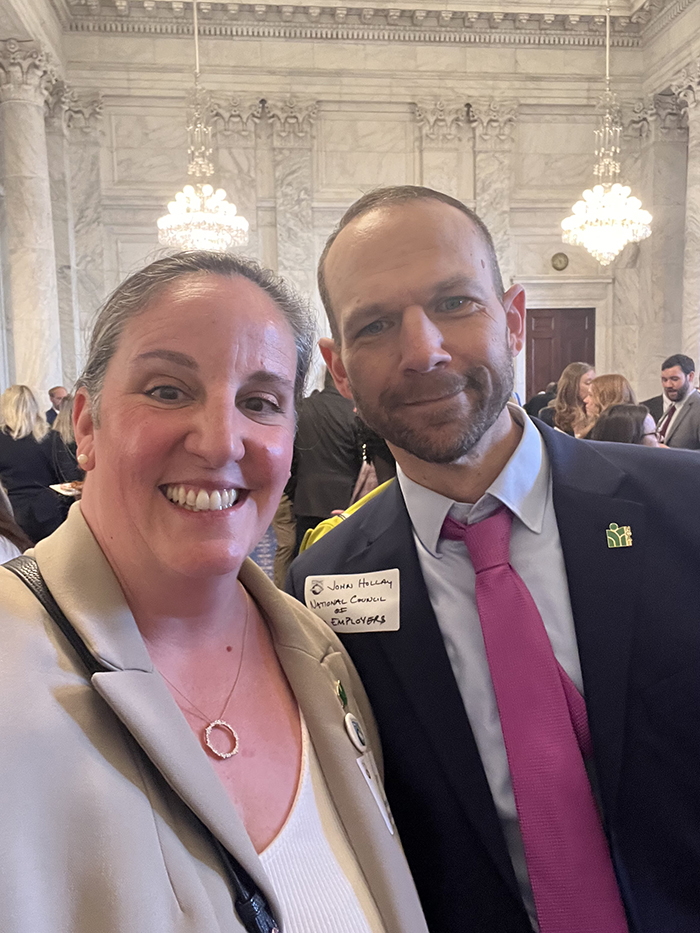
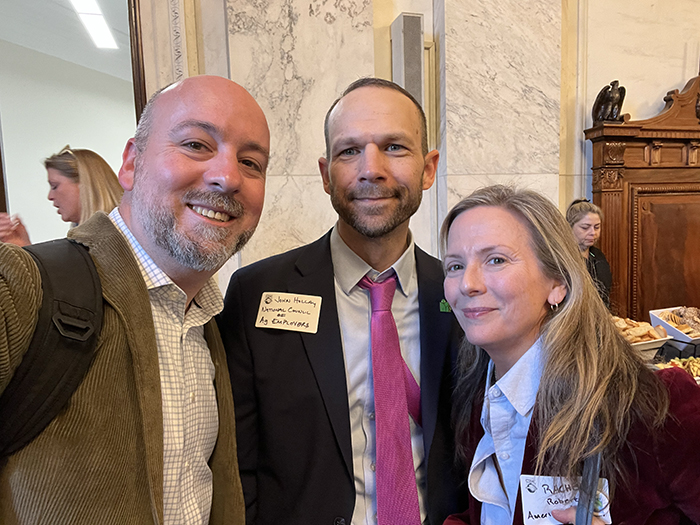
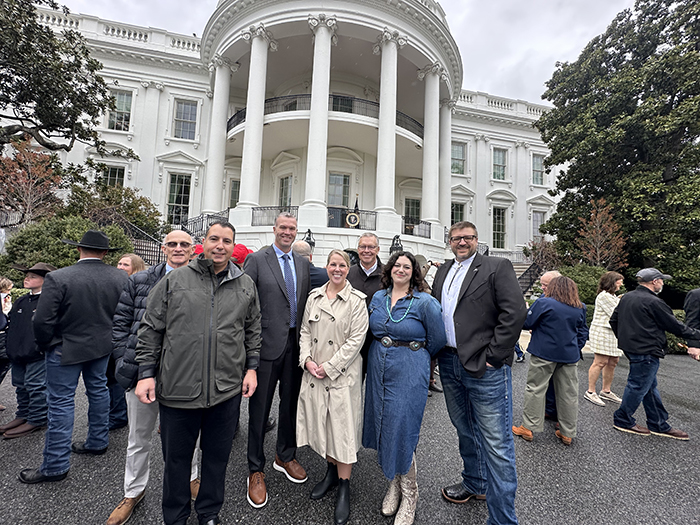
The House and Senate were in this week.

Last week NCAE’s Ag Labor Forum was one of the hottest tickets in Las Vegas, even with the National Finals Rodeo taking place at the same time. 

Attendees were treated to exciting remarks from Secretary Lori Chavez-DeRemer as she discussed the Department of Labor’s (DOL) new AEWR rule and the opportunities the new rule presents to maintaining food production in the U.S. The Secretary also discussed DOL’s rulemaking that is in process to rescind the offensive “Worker Protection Rule” which would have allowed union organizers access to U.S. farms and ranches to threaten, harass and intimidate employees in violation of the Constitution and the Congress. 

Deputy Secretary of Agriculture Stephen Alexander Vaden, a former judge and general counsel of USDA, engaged in a fireside chat. Judge Vaden and I discussed the benefits for agriculture in the One Big Beautiful Bill, the improved economic environment for farms and ranches due to the DOL’s new AEWR rule, and the positive effects from USDA’s reorganization plans. 

Attendees were also treated to provocative sessions on the new AEWR rule, succession planning for businesses, as well as income tax issues for H-2A workers. Brian Pasternak from the Office of Foreign Labor Certification gave us his perspective on the new AEWR rule and his team’s willingness to come back to work during the shutdown, without getting paid, to process applications. The State Department tackled questions on processing at the consulates and the ever-vexing Administrative Processing that employers can face. 

And so much more. 

This week, NCAE discussed litigation and legislation at the Great Lakes Expo in Grand Rapids. It was exciting to see so many members and greet nonmembers, encouraging them to join NCAE and help us advance American agriculture.  

Have a great weekend! 

Michael

News articles and citations of interest for week ending 2025/12/12:


Many Arkansas farmers use imported labor to maintain production.

President Donald J. Trump alongside U.S. Secretary of Agriculture Brooke L. Rollins, U.S. Secretary of the Treasury Scott Bessent, Senate Agriculture Committee Chairman John Boozman (AR), Senator Deb Fischer (NE), Senator John Hoeven (ND), Representative Austin Scott (GA), and farmers from Arkansas, Iowa, Indiana, Kansas, Louisiana, Pennsylvania, Ohio, and Texas today announced the U.S. Department of Agriculture (USDA) will make $12 billion available in one time bridge payments to American farmers in response to temporary trade market disruptions and increased production costs that are still impacting farmers following four years of disastrous Biden Administration policies that resulted in record high input prices and zero new trade deals.

Colorado farmers and ranchers face current challenges and look ahead to 2026.

Articles

Read articles written by NCAE staff.


View All

Press Releases

Read the latest NCAE Press Releases


View All